Showing posts with label cross. Show all posts

Saturday, December 27, 2014

A Messy Christmas

Christmas Eve 2014
Luke 2:1-20

Merry Christmas Bethany Lutheran Church!  May the grace and peace of our Lord and Savior, be with you on this fine evening.

My wife and I received an unusual package in the mail the other day.  We got out the knife, opened up the box, which was stuffed full of ...Diapers!  It was full of diapers.  

For those of you who don’t know, my wife and I are expecting our first child in April, and so up to this point, we’ve been getting all of the fun baby stuff in the mail.  We have our crib.  There are little onesies and stuffed animals that keep showing up at our door.  It’s the kind of stuff that makes you want to be a parent.  

But diapers?  Am I ready for that? The other day, I had this realization that I have never changed a diaper in my life! Whenever a baby needs to be changed, I do what every rational guy does when - I run to the basement.

Of course I tell this to parents and they all just laugh at me. One guy on the council had changed so many diapers in his life that he was showing off how to do it with his eyes closed...literally.  I told this to another friend from church who told me, “You know, the first time I changed a diaper I threw up on my shoes!” Yeah. Real helpful guys! Thanks for the moral support!
http://brokeassstuart.com/wp-content/pictsnShit/2014/02/sarcasm_font.jpg
I’m quickly learning that there’s a romantic, made for TV, side of being a parent that’s all high-fives and hugs, bike rides and baseball games. But getting that box of diapers woke me up to the day-to-day reality of being a parent.  It was my first glimpse of the messy side of parenthood.

As much as I would like to take the good parts and leave out the bad ones, the truth is, you can’t have one without the other. You can’t be a parent without changing a butt-load of diapers (pun intended). That would be like saying that you want to experience the thrill of skydiving without the fear of falling. It’s a part of the package, and perhaps we shouldn’t want it any other way.

Every year, I get a similar feeling about the story of Jesus’ birth.  We have such a romantic view of Christmas, that we often miss the bigger picture of what it means for the Son of God to be born in a stable.  

Often, the images we see of the nativity show all of the good, and none of the bad. They’ll paint a romantic scene of a still, peaceful night, with two calm and serene looking parents, surrounded by soft, cuddly looking animals, gentle shepherds, and a host of angels.

http://www.activityvillage.co.uk/sites/default/files/images/images2/the_nativity_story.jpg
The birth of Jesus is often described as a “humble” birth, which strikes me as being a gross understatement. I think a more accurate way to describe his birth would be “messy.”

Mary and Joseph are essentially in a barn. And do you know what goes on inside of a barn?  Everything!  It’s messy in there.  It’s a stable for dirty farm animals, not a hospital! There’s no crib for the baby when it’s born.  It’s just a feeding trough for the animals - a manger.  There’s no soft mattress to lie down on, it’s a bed of itchy hay.  And these shepherds that came to be the first witnesses to the birth of the Savior of the World - they are the poorest folks from the very bottom of society.
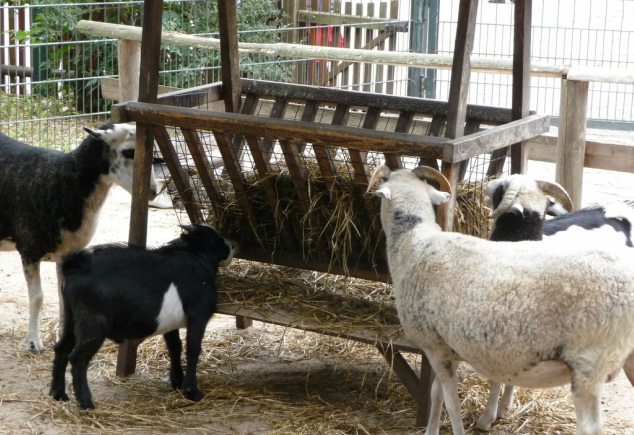
http://beyondsundaymornings.weebly.com/uploads/1/2/0/0/12000631/1355080748.jpg
It’s as if God chose to dive into this world he loved, but couldn’t truly do so without falling into the messiness of life.

This is how the Messiah comes into the world.  Strange isn’t it? But I can’t help but think that there something beautiful going on here - there’s a harmony between the holiness of God and the messy reality of the world.  It’s a message that God is about to do something new - something completely unexpected.  Instead of destroying the world like in the story of Noah and the flood, this time God is going to enter into it - change it from the inside out.

The story of Jesus birth declares that it’s in the messiness of life that we encounter the holiness of God.  It’s absurdly counter-intuitive.  It’s the moment where you get a box of diapers in the mail and realize that this incredible thing that’s happening is going to be intertwined with everything else life has to offer.

It seems that whenever life gets messy, God is in the midst of it. When the world wouldn’t go near the lepers, Jesus was healing them with his touch.  When people walked around the blind beggars, Jesus walked up to them.  Jesus doesn’t even run from the ugliness of the cross.  This God doesn’t avoid the messiness of life - cancer, poverty, war, hunger, death - this God is in the middle of it all.

I’m getting ahead of the story.  Here, in front of us today is the Messiah - a mere baby - lying in a feeding trough for animals.  He’s in a dirty stable, with filthy animals, surrounded by two exhausted parents. And the only people who know about it are the shepherds working the night shift.

Still, I have to believe that this is the most beautiful scene you could imagine. It’s the most precious gift you could receive. And I don’t believe God wanted it any other way.

Merry Christmas Bethany Lutheran Church
and Thanks be to God.  Amen.

Monday, March 3, 2014

Sermon for March 2, 2014: Transfiguration of Jesus

Last Sunday after Epiphany: Sunday, March 2, 2014
PREACHER: Pastor Carrie Smith


Grace and peace to you from God our Father and the Lord Jesus Christ. Amen.

Like many of my fellow pastors, I’ve had a rather interesting path to the pulpit. One of the detours along the way took me into the world of pregnancy and birth. I was hoping to become a midwife one day, but first I became a certified “doula”, or labor and birth assistant. 


As a doula, I met with expectant couples in the months leading up to the due date. I had read every book available on the topic of childbirth, both old and new, standard and a little off-the-wall, and sought to bring all that knowledge with me into these meetings. We made birth plans, practiced comfort techniques, talked about fears, attended classes together, toured the hospital, prepared for breastfeeding, and kept in close contact as the date drew closer.

I saw myself, the doula, as an essential part of the birthing team. And I was, in a way (although most doctors would not have given you the same answer!) I saw myself as bringing ancient womanly wisdom back into the delivery room. I wanted to help to change the attitudes about birth in our culture, one mother and one baby at a time.

These were big ideas! And it was a big honor to be invited again and again into such sacred space. I like to think that I did make a difference, at least for those families, even if I couldn’t single-handedly change the entire culture.

But something important did, in fact, change, especially because I learned something very valuable along the way. At the beginning of each labor, the expectant couple and I would walk into the hospital carrying all of that knowledge, plus a birth plan, and our bag of massage balls and essential oils and relaxation tapes. These were the items we had carefully packed for the journey—a journey filled with many unknowns, but with only one certainty: that it would be the toughest thing the mother and her partner would ever accomplish.

We started off every journey with these big ideas and big bags of stuff. And every time, when fear and anxiety started to take hold, I found that the very best tools I had brought with me were my hands. 


A gentle touch on the shoulder. A tightly squeezed hand. A warm bag of rice held around an aching neck. A cool washcloth laid on a hot forehead. A fist firmly placed in the middle of a painful back. Hands held in prayer. These were the best tools in my doula’s toolkit, and it turns out that while all my training and reading was helpful and good, what the laboring woman needed most was affirmation of my presence. She needed to know she was not alone. Whether or not things played out exactly as she had written in her birth plan—and there were almost always detours along the way—she knew I was by her side. A simple human touch turned out to be the miracle that could calm her fears and give her the strength to continue the journey.

The story of the Transfiguration of Jesus takes place just before he and the disciples head out on a journey—the journey to Jerusalem and the cross. It’s a story that has plenty to pay attention to: Jesus’ face shining like the sun, his clothes turning white, the voice booming out of a big cloud, and the mysterious appearance of Moses and Elijah. But what draws me in, what makes me take notice, isn’t the big, flashy stuff God was doing up there on the mountain, but rather that bit at the end, where Scripture says:

“When the disciples heard this, they fell to the ground and were overcome by fear. But Jesus came and touched them, saying, “Get up and do not be afraid.”

Hear those words again: Jesus came and touched them. Jesus, who had just been engulfed in bright white light and who was miraculously standing in the company of the long-dead Moses and Elijah, in a moment packed with more meaning and intensity than we can rightly understand, saw the fear of his friends, and reached out to touch them. There they were, cowering on the ground (and who could blame them?) when Jesus came near, and placing a hand on them, said, “Come on, get up, guys. Don’t be afraid.”

A hand on the shoulder. A simple human touch. Words spoken in kindness. Affirmation of Jesus’ presence with them. It’s just what they needed to continue the journey.

Now, we can say the Transfiguration is about many things: It shows how God’s glory and power shines through Jesus. It affirms that Jesus is a man of authority, on par with the great Moses and Elijah. It also definitely demonstrates how even Peter, James, and John, close associates of Jesus, were confused about what he wanted them to do next (“Hey, guys, this is awesome! Let’s build some cabins and stay up here forever!”)

All of these things are true. But today, what I experience in the story of the Transfiguration is how God, in God’s goodness, gave the disciples just what they needed for the journey ahead. For Peter, James and John, who had already given up so much to follow Jesus, the path ahead seemed filled with many unknowns, but with only one certainty: that it would be very, very hard. In chapter 16, immediately before this scene on the mountain, Jesus tells the disciples that “he must go to Jerusalem and undergo great suffering at the hands of the elders and chief priests and scribes, and be killed, and on the third day be raised.” Peter didn’t like that a bit, remember? When he objected, Jesus rebuked him, saying “Get behind me, Satan.” So again, Jesus tried to tell them, ““If any want to become my followers, let them deny themselves and take up their cross and follow me.”

It’s no wonder the disciples were afraid. When they first said they would follow Jesus, they never imagined the journey would include a trip to Jerusalem, a false conviction, a death sentence, and the cross. As many times as they heard him say it, they still didn’t want to believe this was the only path ahead. I can liken the disciples’ reluctance to accept this news to what happened with 100 % of the laboring women I have accompanied. Without fail, all birthing women get to the really hard part and say: “Well, that’s it. I’m going home. Someone else is going to have to finish this, because I’m done!” I can personally attest to the truth of this, in fact! However, this could be said for all of us, men or women, young or old, couldn’t it? When the going gets tough, most of us, like the disciples, start to look for a way around the inevitable. Surely, there’s another way. Maybe it’s not too late to just go home.

But Jerusalem, and the cross, were most definitely on the itinerary, and Jesus was having little luck inspiring his friends to jump on board. So what did the disciples need to continue on? What was it they were lacking? Assurance. Affirmation. Understanding. They needed positive affirmation that this man, Jesus, was someone they could count on. And that is exactly what they received from God on the mountain that day. To us, it seems a bit over-the-top, doesn’t it? All that light shining from Jesus’ face, his clothes changing colors, and the appearance of a couple of ghosts—what’s the point? But for Peter, James and John (and especially for the early Christians who heard this story later), these details were critical. All those flashy details make one really big point: that Jesus has authority, and that authority comes from God. “This is my Son, my beloved, with whom I am well-pleased. Listen to him!”

And then, when the intensity of the moment was just too much for Peter, James, and John, and they fell down in fear, they received the other affirmation they needed that day. With a simple touch of his hand, Jesus reassured them that he was still with them. “Get up, and do not be afraid.” The lights and color-changing clothes and the voice from the cloud were impressive; but the touch of Jesus, assuring them of his presence with them, gave them the strength they needed to get up and follow, down the mountain and all the way to Jerusalem. 


As disciples of the same Jesus, I believe that God gives us, too, what we need for the journey. Sometimes, God can be a little flashy. Do you remember the double rainbow guy from a few years back? If you missed this viral video, I can sum it up in a few words: A guy is out camping on a mountain. He wakes up to see a beautiful, full double rainbow in view of his campsite. He turns on his video camera, and proceeds to gush about the beauty of this double rainbow for 3.5 minutes. “Oh, wow! Oh man! It’s a double rainbow! It’s so bright! Wow, what does it mean, what does it mean?” People have been making fun of this guy for years for crying over a double rainbow, but what I saw was a person simply overwhelmed by the beauty of creation. Maybe you’ve felt that way, too—overwhelmed by how a beautiful sunrise or an exceptionally clear night sky full of stars can renew your energy and turn your heart again to trust in the God who created it all.

But sometimes, what we need for the journey isn’t a double rainbow, or a blazing sunset or an intense religious experience. Sometimes, what we need to continue on is the simple touch of Jesus. Perhaps it comes as a sudden sense of peace when you’re lifting up your concerns in prayer. Maybe it’s a really well-timed hug from a friend you’ve run into on the street. Maybe it’s a passage of Scripture you’ve read a million times, but this time, it’s as if Jesus is speaking directly to you. Very often, for me, it’s happens through the simple but powerful presence of Jesus Christ in the bread and the wine. Sometimes, the moment is so insignificant, that it’s only later that we recognize the hand of Jesus was present. 


Whether through a mountaintop experience, an epiphany of understanding, or a full double rainbow—or more simply, through the touch of a friend or the kindness of a stranger—God comes to us, again and again, breaking into our lives in big and small ways, giving us the strength and assurance we need to follow Jesus wherever he leads. As we prepare today for the beginning of Lent, walking again alongside Jesus to Jerusalem and the cross, I pray that you will receive the inspiration, the strength, and the assurance you need to continue the journey with him. And know that whatever you are facing this day, and every day, Jesus walks with you, too. Do not be afraid. Amen.


Wednesday, June 5, 2013

Sermon for June 5, 2013: Worth It


Sermon for June 2, 2013
Second Sunday after Pentecost
Luke 7:1-10

Preacher: Pastor Carrie Smith

Grace and peace to you from God our Father and the Lord Jesus Christ. Amen.

Ask any of our neighbors, and they’re likely to tell you they’re just waiting for us to put up a yard sign that says “Smith Family Bed and Breakfast”. Our kids don’t bat an eye when I tell them “Better clean up the basement today” but instead come right back with “Who’s staying with us this time, and what country are they from?” Just in the last year we’ve hosted a group of Palestinian teenagers, three girls from a Ugandan children’s choir, a priest from Bethlehem, a professional singer, a random British stranger on a bicycle tour across the U.S. (I preached about that experience last year!), an old seminary friend and her entire family, and of course a constant stream of Chicago friends seeking a respite from the city. 

We love hosting guests in our home, and consider it our Christian responsibility to show hospitality. Most of the time, we clean up a bit first. Last week we even bought a new mattress before Chicago friends came to stay. We noticed they hadn’t been out to visit for awhile, and then we remembered how much they hated our blow-up air bed. We put two and two together…and headed to the mattress store.

We’ve received many guests at our home, but there was one scheduled visitor who made me question if we were even worthy of his presence.

His name was Calvin Morris, and he was to be the speaker at the FaithBridge Interfaith MLK breakfast. As an eager new member of the MLK breakfast committee, I of course raised my hand and said, “Sure! I have room to host him at my house!” 

It wasn’t until I Googled the invited speaker that I started to question my eagerness to volunteer. I learned that the Rev. Dr. Calvin Morris was the national coordinator of the Southern Christian Leadership Conference's Operation Breadbasket from 1967 to 1971. After leaving there, he was the executive director of Atlanta's Martin Luther King, Jr. Center for Non-Violent Social Change, working directly with Coretta Scott King. As I read more of his impressive resume, I realized Dr. Morris was truly a history-maker—someone we might read about in a textbook on the Civil Rights movement. 

Suddenly, I wondered if it had been wise to offer to put this man in my basement. What would he think of that patch of carpet the dog chewed up? Did he even like dogs—or teenagers? Will our house meet his standards? Then, another panicked thought: This man is a community activist and an urban dweller—maybe he’ll be offended by my suburban existence! Maybe my house is too big!
In other words: I suddenly saw my home and my life with new eyes, and I judged myself completely unworthy. I wanted to forget the whole thing, and book the Rev. Dr. Morris a room at the Country Inn & Suites.  

Have you felt unworthy lately?

Feeling unworthy was apparently a new emotion for the Roman centurion in today’s Gospel reading. Here was a man who was accustomed to getting what he needed, when he needed it. He had a fair amount of power and privilege: servants working for him, soldiers under his authority, and an esteemed reputation within the community, cultivated after building a synagogue for his Jewish neighbors.

So when his beloved servant was ill, the centurion’s instinct was to use that power, privilege and accumulated respect to bring Jesus, a healer, to his home. He of course called upon the Jewish elders who had benefitted from his good deeds to visit Jesus, a Jewish man. 

Sure enough, when the elders reached Jesus they had only good things to say about the centurion. “He is worthy of having you do this for him, for he loves our people, and it is he who built our synagogue for us.” Having received this good recommendation, Jesus set out to see the centurion and, apparently, to heal the slave, when something surprising happened.


It’s not clear from the text what exactly occurred, but it seems that sometime after sending the messengers out, the centurion had second thoughts. Maybe, like me, he looked around his house and saw the chewed-up carpet. Maybe, as some scholars suggest, he was making a political move, expressing false humility to gain an even better reputation.

Or—maybe this Roman leader recognized that this Jesus, who was about to arrive at his house, possessed a different kind of authority; was working under a different system of values; would perhaps be unimpressed by a centurion’s status, privilege, or military might. This Jesus, after all, was said to be a miracle-worker, a healer, a prophet, and even more: the Son of God.

So the centurion sent out some friends with a different message: “Lord, do not trouble yourself, for I am not worthy to have you come under my roof; therefore I did not presume to come to you. But only speak the word, and let my servant be healed.” 

These words stopped Jesus in his tracks—literally. He stopped in the road and turned, telling the crowd that was always following him, “I tell you, not even in Israel have I found such faith.” Jesus never made it to the centurion’s home, but when the centurion’s friends returned, they found the slave had been healed.

This centurion, because of his humility and surprising recognition of Jesus’ authority, has been lifted up as an example of great faith. But I must say that I struggle with this text, because what I don’t want you to hear today is one more reason to say to yourself “I’m not worthy.” I think we do enough of that already:

I’m not worthy of God’s love.
I’m not worthy of having a healthy relationship—this is the best I deserve.
I’m not worth being treated right at school or having friends.
I don’t have anything to contribute to the discussion.
Why would God listen to my prayers, after all the mistakes I’ve made?

I cringe when I think of teenagers, or a spouse in an abusive relationship, or someone who has never known God’s forgiving and redeeming love, hearing this story and thinking: “See? I’m right in thinking of myself as unworthy. Jesus even blessed this way of thinking.” 

But I don’t believe this is a story about Jesus blessing the kind of self-hate we are so good at cultivating. This is not a case study on how to beat yourself down so you are worthy of God’s attention. Humility is a virtue, but self-loathing is not. 

Instead, I believe the story of the faithful centurion is about authority. It’s about recognizing who has authority in our lives, and therefore who judges your worthiness.

When the centurion first called for Jesus, it was not “What a friend we have in Jesus, all our sins and griefs to bear”, but more like “What a solution I have in Jesus, all my problems to solve.” He sought an answer to his problem—a sick slave—using the authority he had at hand: power, privilege, money, position, reputation. According to this system, he judged himself worthy of having his request honored, his needs met, and his slave healed.  

The centurion was therefore not a person of faith at the moment he called upon Jesus—but it didn’t matter, because the religious leaders also seemed to agree with his judgment. “He’s a good guy!” they said. “You should totally do this for him, Jesus.”  

And you know what? The faith of the centurion didn’t seem to matter to Jesus, either. In the telling of this story, we often forget that Jesus was already on his way to visit the centurion when he received that message: “Lord, I am not worthy to have you come under my roof.” Jesus was already on the road to the centurion, well before the centurion was on the road to faith. 


But the faith of the centurion is amazing, and surprising, and worthy of note, because it was he, an outsider, who was able to proclaim the truth. When even the religious leaders believed the lie that “If I am a good person and work hard, God will hear my prayers”, the centurion was the one who proclaimed: “Lord, nothing that I have and nothing that I have done has made me worthy of your visit. No matter what I bring to the table, Lord—you alone say who is worthy and not worthy. Your judgment matters, and no one else’s.” 

Sisters and brothers, I hope you are hearing today that the story of the faithful centurion is about just how worthy you are in the eyes of God. Here we encounter a Jesus who places no value on power or privilege, who doesn’t care how many soldiers we command or how big our house is, who never sees the chewed up carpet or the size of our credit card debt or the number on the scale. This is about a God who, through Jesus Christ, sees instead our faith alone and deems us worthy. And in fact, in this story we meet the Jesus who starts the journey toward you before you have any faith at all—because you are worth it.

In the book “Tattoos on the Heart: The Power of Boundless Compassion”, Father Gregory Boyle tells of ministering to a 15 year old gang member in a county detention facility. Father Greg asked about his family. 

“That’s my mom over there.” the boy said. “There’s no one like her. I’ve been locked up for more than a year and half. She comes to see me every Sunday. You know how many buses she takes every Sunday—to see my sorry self?”

He paused for moment, and then gasping through tears, he said, “Seven buses. She takes…seven…buses. Imagine.” 


What better way is there to explain the expansive love of God? How better to describe how God sees us, through the eyes of Jesus: You, Child of God, are worth a seven bus journey for a 15 minute visit. You are worthy of love, worthy of respect, worthy of hope and a future—not because of anything you have, or anything you have done—but because of Jesus and the cross. And Jesus says: you are worth even that. 

Amen.  

Friday, April 6, 2012

Good Friday: April 6, 2012


GOOD FRIDAY 2012
April 6, 2012
PREACHER:
Pastor Carrie Smith
John 18:1-19:42
“Meanwhile, standing near the cross of Jesus were his mother, and his mother’s sister, Mary the wife of Clopas, and Mary Magdalene. 26When Jesus saw his mother and the disciple whom he loved standing beside her, he said to his mother, ‘Woman, here is your son.’ 27Then he said to the disciple, ‘Here is your mother.’ And from that hour the disciple took her into his own home.”


♪Jesus, keep me near the cross;
there a precious fountain,
free to all, a healing stream,
flows from Calvary's mountain.
Refrain
In the cross, in the cross,
be my glory ever,
till my raptured soul
shall find rest beyond the river.

It’s difficult to picture Mary, the mother of Jesus, standing near the cross. How does a mother watch a son die? How did she not lash out with anger at those who were causing him pain? How did she survive those six long hours as he suffered there before her?
Scripture doesn’t tell us how Mary felt, or what she said, as she stayed there near the cross. We don’t know if she stood silently, if she wailed loudly, or if she argued with the soldiers. We only know that she was accompanied there by her sister, by Mary Magdalene, and by the disciple Jesus loved. The rest is left to our imagination.
But for most of us, we don’t have to stretch our imaginations too far to know what those hours were like. If we’ve lived life at all, we’ve known suffering. If we’ve loved at all, we’ve known loss. And perhaps we can therefore relate to Mary’s need to stay there, near the cross, and to experience each moment, even when those moments are almost unbearable.
In my experience as a pastor, I’ve stood with others who, like Mary, remained steadfast at the foot of the cross: Parents who sit vigil at a hospital bed for days. Spouses who act as caregivers for ailing partners, year after year. Families who stand by loved ones struggling with mental illness or addiction. Friends who stay with the grief-stricken through long nights of doubt and sorrow.
I don’t know Mary’s pain of losing a son in a public execution. I have, however, lost much-loved and longed-for babies. My spouse and I have suffered three miscarriages over the years. And while I’m grateful I don’t know what it’s like to watch my child suffer and die like Mary did, I do know what it’s like to ache for my child. And I know what it’s like to want to hang on to the moment, and to stay present at the cross, no matter how painful it seems.
For me, it was the last day of being pregnant that I wished would last forever. I would cling to those hours of hope before the lab tests came back--dreaming of names and planning for the future. And then, even when things looked grim, I would still cling to each moment, still pregnant with hope, making bargains with God, if only my child could be saved. I would have endured bed-rest for months. I would have taken vitamins, injected hormones, and suffered anything necessary for a successful pregnancy. “Jesus, keep me near the cross”, I prayed. I would have stayed there forever, if it could have made any difference.
What was Mary thinking in those hours at the foot of the cross? If Jesus, the Son of God, felt forsaken on the cross, how must Mary have felt? After all, the God who had chosen her for this role as blessed virgin, theotokos, mother of our Lord, was now the same God who allowed her beloved son to be crucified. Did she bargain with God? Did she pray for more time, or did she just pray his suffering would end? Did she, like Jesus, feel abandoned and alone?
Mary may have felt alone, but Scripture tells us that Jesus remembered her. Even in his suffering, he cared for his mother. He didn’t send her away so she wouldn’t have to see. He didn’t tell her not to cry or not to be angry. And, most importantly, he didn’t magically take away her pain and suffering. But seeing her there, his heart was turned toward her and toward the disciple he loved, and from the cross he provided for their mutual care and companionship. “Woman, here is your son.” he said. Then he said to the disciple, “Here is your mother.”
This moment is so important to Christian tradition that it is honored as one of the Stations of the Cross. We linger here, at this point in the story, because it’s a moment that tells us much about Jesus, about the cross, and about our own suffering.
Caring for his mother and the beloved disciple in his last moments, Jesus shows us that in death, as in life, he was about giving to others. From the cross he gave Mary a new son to care for her. In the same way, he gives us all the promise of new life.
Reaching out in love even as he struggled to breathe and to withstand great physical pain, Jesus shows us that the cross doesn’t have the last word. No matter what the powers and principalities of this world may do to us, nothing can take away our humanity or destroy our spirit: neither oppression, nor disease, and nor even death.
And above all, joining his mother and beloved friend in a bond of companionship , he taught us something about our own suffering. When we are standing at the foot of the cross, facing something unimaginable—the death of a loved one, a medical diagnosis, a life crisis, or the death of a relationship—Jesus is there, too. He knows our suffering. He looks upon us with love. And he provides for us, joining us together in the bonds of community, in mutual care, in prayer, and in love for one another.
French poet Paul Claudel wrote: “Jesus did not come to explain suffering nor to take it away; he came to fill it with his presence.” As we gather tonight near the cross, standing vigil with Mary and her sister, Mary Magdalene and the disciple Jesus loved, we pray for the strength to remain here. And we give thanks to God for Jesus Christ, who knows our suffering; who is with us in our pain; and who by his suffering and death has redeemed the world. Amen.