Sunday, April 20, 2014

Easter Sunday Sermon 2014

Easter Sunday Sermon 2014


PREACHER: Pastor Carrie Smith

Grace and peace to you from God our Father and the Lord Jesus Christ. Amen.

If Mary Magdalene and the other Mary visited a cemetery in Illinois this Easter morning, they might expect to see a snowdrift blocking the entrance of the tomb. This has been a long, hard winter, dear friends. I don’t know about you, but I’m so accustomed to seeing snowflakes in the forecast that I could scarcely believe it when I saw a number with a “7” at the front predicted for Easter Sunday. But it’s true! The winter is past, the dark days are over, spring is here!

Alleluia, Christ is risen! Christ is risen indeed, alleluia!

The women went to the tomb early that morning with clear expectations of what they would see: Not a snowdrift, but certainly a stone blocking the entrance. Guards keeping watch for thieving disciples. And darkness, slowly giving way to the light of dawn—just enough light to see the tomb where their beloved Jesus had been laid. 

The two Marys expected death to have all the power that morning, just as we expect winter to continue its indefinite reign. But when they arrived at the tomb, the women saw instead something entirely unexpected: An angel in white, descending from heaven in a flash of lightning, and by the power of God rolling the stone away and opening the tomb! Suddenly, it was the guards who were like dead men, paralyzed by fear. This was an earth-shaking, game-changing moment, as God’s power was shown to be greater than death’s power. The angel rolled away that ugly stone—the symbol of every power and principality, every system of oppression, every cancer, every sin, every monument to death and destruction—and he sat on it. Sisters and brothers, hear again the Good News, that because Christ has been raised, the mighty obstacles in our lives—even mighty death—have been stripped of their power, and today are no more than resting places for angels.

Alleluia, Christ is risen! Christ is risen indeed, alleluia!

By the power of God, and by God’s authority, the unexpected angel rolled away the stone and opened the tomb, revealing that Jesus was no longer there. But his work wasn’t done! Angels are messengers, and this one had a message for the two Marys. So he opened with the standard angelic greeting: “Do not be afraid!”
Angels are always doing this, have you noticed? Throughout the Scriptures, whenever an angel appears, he tells us not to fear. There’s no introduction, no handshake, and no small talk, just:

“Don’t be afraid, Zechariah…your wife Elizabeth is going to have a baby.”
“Don’t be afraid, Mary…you’re going to have God’s baby!”
“Don’t be afraid, Joseph…your fiancĂ©e is having God’s baby, and he’s going to save the world from all its sins!”

It strikes me as an odd way to start a conversation, a little like saying: “Now, whatever you do, DON’T think of the Easter Bunny.”…

There, you just thought about the Easter Bunny, didn’t you? My work is done here.

Then again, the sudden appearance of angels could be a bit scary, especially when they’re buff enough to move big stones around. Perhaps acknowledging that fact up front can’t hurt! So this angel in white begins the conversation in the usual way, announcing “Do not be afraid!” And then he gets right to the point: “I know you’re looking for Jesus who was crucified. He’s not here! You can take a quick look at where he was last night, but then you need to go. Go, quickly, and tell the disciples that Jesus has been raised! In fact, he’s already gone on ahead of you, and is waiting for you in Galilee.


Jesus. Isn’t. Here. Now go!”

Nothing to be afraid of, right? Just a little angel. Just a little announcement. Just a little mission from God…nothing to fear here.

Then again, unexpected things and big announcements can be scary. I know a little something about this, since in my family (and here at Bethany) we’re preparing for the fact that Robert, Caleb, Zion and I are moving—not just around the corner, but to Jerusalem, to work with ELCA Global Mission.  

While this is exciting news, it’s also scary, for all sorts of reasons. And like Mary Magdalene and Mary the mother of Jesus on that Easter morning, I find myself hanging out at the tomb a lot these days, thinking about what was, and wishing things didn’t have to change.


But as we’ve heard, angels come at unexpected times, and I had one visit me this week. Actually, his name is Matthew, and he’s our five year old neighbor. Just like the angel in today’s Gospel, Matthew wastes no time on niceties or introductions when he visits.

The other day, he walked right on in my front door and said: “Do you have any more Hot Wheels?”

You see, Matthew has been the primary beneficiary of our deep cleaning in preparation for the big move. I would estimate he’s received around 150 Hot Wheels cars already, not to mention a box of books, several winter coats, and a remote control truck.

On this day, however, I wasn’t too excited about entering our dark and messy crawlspace to look for Hot Wheels for Matthew. After all…it was Holy Week. There was plenty for this pastor to do! And besides, I was pretty sure there weren’t any Hot Wheels left anyway.


“Matt, I’m not going down there right now. Maybe another day.”

“Miss Carrie, go down there now. I think there might be some cars.”

“Matt, I said, I have other things to do. And there are no more cars.”

“No, Miss Carrie, go down there! There might be Legos.”

“Matt, I told you…another day.  I’m busy.”

“Miss Carrie, let’s go. This is important. I’ll go with you.” And just like that, we were marching down the stairs and into the crawlspace—the resting place for all forgotten toys—to look for Hot Wheels.

I suppose the most expected ending to this story would be the discovery of a forgotten stash of tiny metal cars. Alas, no such luck, for Matthew or for the hearers of this sermon! But we did find a robot, and a whoopie cushion, and a marshmallow shooter.

And I discovered something else. I discovered that one reason I was reluctant to go downstairs, and to check in that crawlspace, is that part of me wanted to hang on to what was. Part of me wanted to keep those little plastic things right where they were, because they reminded me of my kids when they were little, and of the happy times we had in our house, and of all that we’re leaving behind here at Bethany and in this country. Part of me wanted to prop a stone up in front of that crawlspace and keep the door shut, rather than let it be opened and see what comes next, because I was afraid.

That’s a lot of meaning to pack into one dark crawlspace, don’t you think? But as I watched my unexpected angel, Matthew, joyfully skip across the street with his robot, whoopee cushion, and marshmallow shooter, what I saw was joy, and resurrection, and new life. I was reminded that we need those angels who are always on message, persistent in reminding us: “Don’t be afraid!” We need to hear, again and again (and not just on Easter morning): “That big stone you’re worried about? It’s already been moved. Death and its supposed power? It’s already been defeated. That tomb where you’re sitting vigil? It’s empty. Because Jesus is not here! He’s gone on ahead of you, and will meet you in Galilee. Now go, quickly, and share the Good News!”

Alleluia, Christ is risen! Christ is risen indeed, Alleluia!

My dear people, life often brings unexpected, earth-shaking news. We find ourselves at the tomb of a loved one—or at the chemo clinic, or the divorce lawyer, or the unemployment office. We’re faced with changes that make our stomachs hurt and our hearts ache and require more risk and faith than we’d like to expend. We might even be on the road, following where God is leading, and the world keeps throwing stones in our path. In these moments, death seems to be reality, while resurrection seems an unlikely dream. The obstacles in front of us—and the guards sent to protect them—appear too massive and too permanent.

But we are not afraid! We are not afraid, for we know that Jesus, who was crucified, goes ahead of us. We are not afraid, because Jesus, who was raised, is waiting for us in Galilee. And Jesus, who loved us to the end—all the way to the cross—might just meet us on the road for a little extra encouragement. And when he does, he will be right on message, along with all the heavenly host, proclaiming “REJOICE! And do not be afraid!”


Alleluia, Christ is risen! Christ is risen indeed, alleluia! 

Friday, April 18, 2014

Maundy Thursday 2014

Maundy Thursday Sermon 2014


PREACHER: Pr. Carrie Smith

Grace and peace to you from God our Father and the Lord Jesus Christ. Amen.

Sometimes a thing is said that could be taken as a compliment…or it could be the exact opposite.

For example, the other day I heard this said about someone: “He’s always the person in the room with the highest opinion of himself.”

Ouch, right? Of course, then there was yesterday, when I was trying to politely leave a pastoral home visit, and mentioned I still needed to finish this sermon. The church member I was visiting said, “Well, you’ve never seemed short on words, so that shouldn’t be any trouble.”

Whether you call it sarcasm or a backhanded compliment or just Midwestern indirect communication, you know it when you hear it! And it often stings with a strong hint of truth.

Very often, it’s when reading or watching the news that I find myself thinking: “Ah, look—the Christians. See how they love each other.”  


Ah, the Christians. See how they love each other?
Sarcasm intended.

But today, Maundy Thursday, Christians across the world gather in the name of love, hearing again the new mandate, the new command, Jesus gave us—that we should love one another. On the night in which he was betrayed, Jesus told his friends that when he’s gone, this is how people will know they belong to him. It won’t be about a uniform, or a nametag, or a secret handshake. Jesus says: “By this everyone will know that you are my disciples, if you have love for one another.” This is who you are. This is how you will be known. This is who I’m sending you out to be.

It could be said, therefore, that this one day in the Christian year, above all others, is about identity: Who are we? Who are the Christians? Christians love God with all their heart, with all their soul, with all their strength, and with all their mind. Christians love their neighbors as themselves. Christians are people who love one another as Jesus loved them. We know this stuff by heart, right? Love one another. It’s such a simple command, yet clearly so difficult to obey.

There’s a story told about St. John the Evangelist, that when he was old and frail, and no longer able to preach long sermons, his disciples would carry him to the crowd with great difficulty. And when he got there, every time, he would just repeat this same phrase over and over: “My dear children, love one another.  My dear children, love one another. My dear children, love one another.” When the crowd, tired of hearing the same old thing, asked why he kept repeating it, he answered: "Because it is the precept of the Lord, and if you comply with it, you do enough.” If I were to say that in my mom voice, it would sound like this: “Why do I keep saying it? Because I can’t tell if you’ve heard me yet!”

Jesus said: This is how they will know you are my disciples, if you have love for one another. This is our identity. This is who we are! We are people of love. But here we are, 2014 years after that last supper, and if you didn’t know anything about Christians, you might not guess LOVE to be our greatest achievement. You could peg us as star debaters. After all, we’re always arguing about something: sex, welfare, and guns; hymns versus praise bands, screens versus no screens, and late service versus early service; whose theology is more systematic or more emergent, and especially who gets to set the rules for everyone else’s behavior. You could safely assume that all Christians are master architects, experts at putting up walls—some designed to keep people out, others reinforced to keep people in. The best guess might be that we’re some a club for archaeology or museum studies, for the way we put so much effort into preserving the past.

Not many people, I’m afraid, would take a look at the church today and say “Ah, look at the Christians! See how they love one another!”

Dear friends, I say we are victims of identity theft! 

Somehow, along the way, we’ve misplaced our ID cards and lost our passports. Our names have even been changed. We’ve forgotten who (and whose) we are! In baptism, we were called beloved children of God, sealed by the Holy Spirit and marked with the cross of Christ forever. From the mountain, Jesus taught us to love even our enemies. At the Last Supper, Jesus sent us out to be people who loved as he loved—all the way to the cross. But even in a supposedly Christian culture, we’ve struggled to be who Jesus says we are. We’ve been photoshopped, airbrushed, cropped and filtered into more acceptable, more marketable, and less controversial versions of ourselves.

One could say that in light of this massive identity theft, what we’re doing here tonight is a bit sad. What’s the point in gathering to remember a commandment we clearly cannot or will not follow? What use are these prayers, these words, this table? Why bother with washing feet? Why gather to reenact what we can’t seem to accomplish as a community, even after 2,000 years?

To this, I would say: What we are doing here tonight is no memorial to who we thought we would be. This isn’t funereal, this is prophetic. We gather today not only in hope, but in defiance. We gather to reclaim our identity as people who love one another because Jesus loved us to the end. This is who we are—the beloved. 


We may not look like ourselves, but nothing changes the fact that love is in our DNA. And so we gather again on this Maundy Thursday, to ask for forgiveness, to gather at the table, to wash feet, and to hear again the words of our Lord Jesus, who said: This is how they will know you are my disciples…if you have love for one another.

These aren’t dramas, reenactments, or remembrances of things long past. This is prophecy!  This is us defying gravity. This is us, not just recalling a dangerous memory, but becoming part of God’s vision of the future. When we forgive one another in this space, we gain the courage to forgive even our enemies. When we receive the body and blood of Christ at this table, we become that same body, given for others. And when we wash feet—and perhaps especially when we allow ours to be washed—what looks like a symbolic act is in reality a sacrament, a place where our great need meets God’s great love for us. For Jesus, having loved his own who were in the world, loved them to the end. Jesus loved us all the way to the cross. For this reason, and for his sake, they will know we are Christians by our love.  


Dear friends, love one another. Dear friends, love one another. Dear friends…love one another! 


Monday, April 7, 2014

Sermon for the 5th Sunday in Lent: April 6, 2014

5th Sunday in Lent: April 6, 2014

John 11:1-45 The Raising of Lazarus

PREACHER: Pastor Carrie Smith

"Lord, this stinketh."


Grace and peace to you from God our Father and the Lord Jesus Christ. Amen.

I heard a news story this week about a university student in Nebraska who has created a cologne called “Eau de Death”. Apparently, this chemistry post-doc has figured out how to combine three chemicals which, when mixed together, closely mimic the smell of rotting flesh. Now, aside from wondering why your pastor is beginning her sermon this way, you might be wondering how this cologne would ever be useful. I’m so glad you asked! It would be very useful, says the inventor, in the event of a zombie apocalypse, because we all know from the movies that zombies only eat living people. The stink of “Eau de death” would act therefore, as a sort of “Off” spray, except it would keep away the walking dead instead of mosquitos. 


“Eau de Death” caught my attention this week for sure. And, in fact, this story is strangely related to a few verses of this week’s Gospel lesson which I could not get out of my head! In fact, I found myself going back to the King James Version of the Bible (a rare occurrence indeed) because these verses are even better in that translation. Hear again the Gospel according to John, the eleventh chapter:

38 Jesus therefore again groaning in himself cometh to the grave. It was a cave, and a stone lay upon it. 39 Jesus said, Take ye away the stone. Martha, the sister of him that was dead, saith unto him, Lord, by this time he stinketh: for he hath been dead four days.

Friends, this week, the words of Martha, sister of Lazarus, have been on my lips as well: “Lord…this stinketh.”

It stinks to share the news that I will be leaving this summer to serve in global mission in Jerusalem. It stinks to say good-bye to people I love. It stinks for you, to know you will not only have to say goodbye to me and my family, but also hello to yet another pastor. It stinks for Pastor Paul and the rest of the staff, too. Even though we trust in God to provide, and even though we believe in the call of God through the church, this week many of us at Bethany Lutheran are a bit like Martha of Bethany, standing in front of Jesus with our arms crossed, saying “Lord, this stinketh.”

This stinketh indeed! In John chapter 11, what stinks is Lazarus, who has been dead for four days. But Mary and Martha are pretty sure Jesus stinks, too. Both sisters confront him with the fact that he didn’t come when they called, but decided to wait around for two days with his friends: “Lord, if you had been here, my brother would not have died!” Now, Lazarus is dead, and he’s starting to smell. The whole situation stinks.

Martha and Mary were certain that because Lazarus already stinketh, there was nothing Jesus could do about it now. But we know, of course, that Jesus did do something about it. He may have been a couple days late, but Jesus rolled the stone away from the tomb, prayed to God the Father, and then called in a loud voice, “Lazarus, come out!” And Lazarus, stinky Lazarus, walked out of the tomb. In spite of the unbelieving disciples, in spite of the man’s angry sisters, in spite of the stone blocking the entrance to the tomb, and in spite of the fact that he had already been dead for four days and was starting to stink, Jesus raised a dead man to life. Thanks be to God!

The raising of Lazarus is a miracle, and in the Gospel of John it is the last of a series of signs meant to prove that Jesus speaks and acts with God’s authority. Jesus tells the disciples plainly why he did not go immediately to Bethany: “Lazarus is dead. For your sake I am glad I was not there, so that you may believe.” Feeding the five thousand, turning water into wine, and healing the blind man—these were all impressive. But raising a dead man to life, especially if he was so dead he was starting to smell, removed any question about who this Jesus really was. It also removed any question about what would happen to Jesus next, for this event caught the attention of the authorities, and set in motion his trial, conviction, and public execution on the cross.

Many people who were there that day came to believe. And for us today, the raising of Lazarus is still a powerful proclamation that “Eau de death” may keep away zombies, but nothing keeps Jesus from raising the dead to new life. Sin and guilt, fear and death stink to high heaven, it’s true! But Jesus is the resurrection and the life, and he stands at the door of every tomb calling in a loud voice: “Lazarus, come out!”

Sisters and brothers, this is Good News we all need to hear, because we spend way too much time and effort trying to mask the evidence of sin and death. We may scoff at “Eau de Death”, but we’d be the first in line to purchase “Eau de Perfection” and especially “Sinless #5”. We don’t want anyone to know how bad we really stink, or how much help we need, or how hopeless we feel, least of all God. So we cover up the smell, wrap ourselves tightly, and stay hidden away from the attacking hoards of “perfect people” we’re certain are just outside the door. Little do we know, those supposed “perfect people” are just as unreal as zombies, and the only one standing outside our door is Jesus. When we’re in our darkest place, it’s always Jesus who comes near, and he’s there not to condemn, or to turn his nose up at the smell of our humanity and our mortality, but to bring what he always brings: life, life, and more life. Where Jesus is, there is life. Where Jesus speaks, there is life. Where Jesus acts, there is life! “I am the resurrection and the life” he proclaims. The cross of Christ has defeated the power of sin and death to remove anyone from life with God.

Earlier this week, before I made my big announcement to the congregation, I had a long conversation with a church member. His is a story that bears repeating, and in fact, he’s given me permission to share it with you today, as a testimony to the power of Jesus to raise the dead.

Our brother Ray enlisted in the Army shortly after World War II. He signed up because he wanted to go to college, and his family could only afford to send his older sister. It was 1949. With the war over, the Army seemed like a great way to earn money for college and get some experience in the world.

He could never have guessed that our country would soon be in another conflict, this time in Korea. While there, he did what soldiers are trained to do: he killed people. The first one, he told me, he remembers in painful detail. He’s not sure how many came after that, and he wouldn’t want to count. He did what the government trained him to do. He did his job.

When he came home from Korea, Ray went on with life. He got married, raised a family, and worked hard. He had always been a believer, and while he may not have made it to church every Sunday, he was especially involved with the Fellowship of Christian Athletes. Everything seemed fine on the outside. Ray gave off the aroma of being a family man, a patriot, and especially a man of faith.

But Ray had a secret! For more than 50 years, he had been covering up what he thought was an odor even God could not stomach. For 50 years, Ray lived in fear that God would not, in fact could not, forgive him for what he did as a soldier. Didn’t Scripture say “Thou shalt not kill?” Didn’t Jesus say “not one letter, not one stroke of a letter, will pass from the law until all is accomplished…Therefore, whoever breaks one of the least of these commandments, and teaches others to do the same, will be called least in the kingdom of heaven?” These words kept him bound up by guilt and wrapped tight with fear. Ray seemed to have it all together, but in reality he was the walking dead. A zombie. He was Lazarus in the tomb, not for four days, but for five decades. And it hath stinketh.

But then, not too long ago, something happened. Jesus called out to him again. He said, “Ray, come out!” Actually, the way Ray tells it, it happened when he finally shared his fears and instead of condemnation, he heard these words: “Ray, all have sinned and fallen short of the glory of God. You have nothing to fear. In Christ, you are forgiven. You have always been forgiven.”

True, he had heard these words before. Who knows why these words made a difference on this day, in this conversation, with this particular person! All that matters is that this time, he knew he was forgiven. This time, his dry bones came together, and flesh came upon them, and skin covered them, and his breath returned to him. In Christ, our brother Ray was raised from death to life. It was his 81st birthday.

Dear friends, I started this sermon declaring that we are all Marthas, standing at the tomb and complaining about the stench. But the truth is, every one of us is also Lazarus, and sometimes we just stink. Sometimes, life stinks too! But hear again the Good News: there is nothing in this world-- neither death, nor life, nor angels, nor rulers, nor things present, nor things to come; not our fear of the future; not our past mistakes or our inability to accept forgiveness; not our unbelief or anything else in all creation—that is able to separate us from the love of God in Christ Jesus our Lord. Jesus is the resurrection and the life, and all who believe, even though they die, shall live. Jesus is enough. So come out, Lazarus! Come out and live. Amen.


Monday, March 31, 2014

Sermon for the Fourth Sunday in Lent: March 30th, 2014


Sermon – Sunday, March 30th, 2014
Gospel: God is found in the midst of suffering
Call: Look forward

In the Midst

Grace & Peace Bethany Lutheran Church,
I have some exciting news to share with you all, which some of you may already know.  My twin brother Neal, who is also training to be a Pastor at Luther Seminary and is going through the first call process, has been assigned to the Northern Illinois Synod of the ELCA – which means that whatever church he ends up at he’ll be dangerously close by!  I say dangerous, because we have been known to pull shenanigans from time to time.

Some of you have gotten a chance to meet him already – Others of you have probably seen him … and thought he was me – because as you might know we are identical twins.  And to answer the question that I’m sure you are all wondering right now – yes, at some point in the future we will definitely do a pulpit swap ... and I will NOT tell you ahead of time. (Trust me, it's more fun that way).

Having my brother around is going to be really good for me for a lot of reasons – one of the primary ones being that if I ever get into mischief, I can always blame it on Neal.  I can picture it now.  “Pastor Paul, I could have sworn I saw you and some middle schoolers sticking pink flamingos into (the Bengstons, the Thoreson’s) yard yesterday evening…was that you?”  “Uhhhh. Me? No!  Maybe it was Neal.”

Of course, it’s a double-edged sword.  Neal could easily blame me for his shenanigans as well.  I fear the day when I get an angrily worded email – yelling at me breaking a stain glass window … at a church I've never been too.

But it is nice to have a built-in fall guy – somebody I can always point to and blame when I need it.  Because that really is our nature isn’t it?  When something goes wrong we are always looking for somebody to blame – somebody to point the finger at and say “Aha!  You’re the one who screwed up!”

That has been true of human nature for a long time.  Today we hear the story of a blind beggar and immediately, the disciples want to find out who’s to blame for the man’s condition.  They ask Jesus the preposterous question, “Who sinned that this man was born blind?  Him, or his parents?”

Who sinned?  Really?  That’s what the disciples want to know? Most of us don’t think of blindness as something caused by sin anymore.  It’s a medical condition.  Blindness – particularly if one is BORN blind – isn’t something that we can avoid by a holy life.

But today, I’m inclined to cut the disciples a little bit of slack, because they are simply asking a question that we all want an answer for, and that question is “Whose fault is this?” “Who can we blame?”

We are quick to judge the disciples here, but we ask the same question all the time.  I was listening to the news earlier this week, and they were talking about the horrible mudslide that happened over in Washington State.

As of Saturday 17 people were confirmed dead, and about 90 people are still missing – all because of a rain-soaked mountain that couldn’t hold back the ground any longer.  All those homes – all those people vanished in an instant. 

The newscaster was interviewing a geologist who revealed that this same spot has seen many mudslides over the last century. Geologists and other scientists have studied the area since the late 90s and concluded that it was vulnerable to the same thing happening again. 

They even wrote official reports about it warning people of the danger.  And what was even more astonishing, was that they said that many, if not most, of the townspeople were aware that something like this could happen.

The people on the news were looking for somebody to blame. “Whose fault is this?”  Was there a failure of policy here?  Should people have been allowed to build on an area that was known to be unsafe?  Should they have known better?

Who screwed up here? Who sinned?  In situations like this we really want to have somebody to blame because it makes us feel better.  If we can answer those questions, if we can identify what people did wrong … then maybe we can avoid disaster ourselves.

The only problem is this: sometimes there isn’t anybody to blame. Sometimes it’s just a water-soaked hill that can’t hold back the mud any longer. Sometimes it’s just a man born blind. And so Jesus tells the disciples their answer.  He says, “Neither this man, nor his parents sinned.” 

Jesus is saying that by asking who sinned, you’re asking the wrong question.  The question the disciples asked assumes that God was the one to blame – that God was punishing the blindman for some unseen sin.  But God, Jesus says, didn’t do this.  He didn’t make the man blind.  He didn’t collapse the side of a mountain.

Despite these words from Jesus, we still want to blame God when things go wrong.  When we run out of people to point fingers at, the only one left to blame is God. We sense that in tragedy, God must be close by. And so our instinct is to ask, “Where is God in all this?”

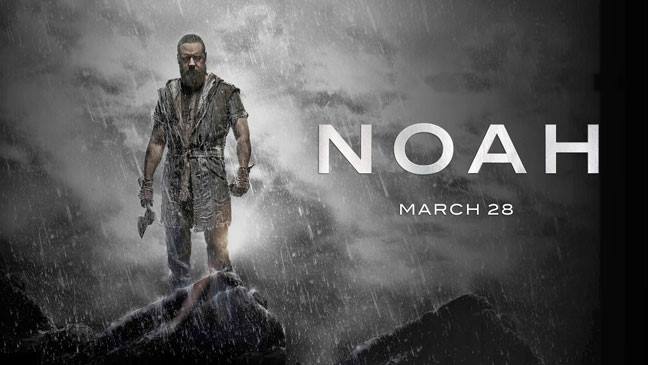
I know it’s a troubling question, but it’s one that we have to ask, because the world is wondering. With the new movie about Noah out in theaters now, I expect there will be a lot of discussion about why God lets bad things happen. 


Where is God when people are born blind?  Where is God when mudslides destroy towns?  Where is God when floods wipe out a city-a world?

There are seemingly two ways to answer that question.  On the one hand, there are the Pat Robertsons and Jerry Falwells of the world who take the route of the disciples and blame 9/11 and Hurricane Katrina on sin. They point their fingers at so-called sinners and lay the blame at their feet.  Nevermind that it’s not what Jesus says – particularly in our text today. 

Another way to answer the question is to say that God doesn’t exist – or even worse – that he doesn’t care. But whenever I find myself doubting, I think about the incredible transformations I’ve witnessed – both in myself and in others – and the only explanation I can come up with is that God must be behind all this.

And I can’t deny God’s love for the world when I see the poor being cared for every day – or when thousands of Christians rush to disaster zones around the globe in the name of Christ. Yes, I believe God cares deeply about this world we live in.

And so Jesus tells the disciples that God didn’t cause this poor man’s blindness.  To ask “Who sinned?” or “Who is to blame here?” is indeed the wrong question because it looks backwards.  Rather, the question to ask is, “How does God respond to tragedy?”  “How do we respond as a people of faith?” 

As Christians, we look forward.  It’s not our place to judge.  It’s not our place to lay blame. It is our place to help.  It is our place to heal.  Jesus tells the disciples that it’s not about what the blind man or his parents did, it’s about what God is about to do through a blind beggar.  Through blindness, Jesus was going to make the world see God.

There is a third way to answer this question of suffering.  The Biblical witness is that God is indeed very present in the midst of suffering, but it’s not because he is causing it, or because it’s his will, or because he’s punishing somebody.  God is present in suffering, because God is working to transform it.

Finally, on the cross we learn that God does not exclude himself from suffering either. God suffers with us. The twenty-third Psalm that we heard today talks about it this way.

1 The Lord is my shepherd, I shall not want.
2 He makes me lie down in green pastures; he leads me beside still waters;
3 He restores my soul. He leads me in right paths for his name's sake.
4 Even though I walk through the darkest valley, I fear no evil; for you are with me;
your rod and your staff— they comfort me.
5 You prepare a table before me in the presence of my enemies;
you anoint my head with oil; my cup overflows.
6 Surely goodness and mercy shall follow me all the days of my life,
and I shall dwell in the house of the Lord my whole life long.

I don’t know about you, but the line that grabs me today is this, “Even though I walk through the darkest valley, I fear no evil; for you are with me.” That’s how God responds in the midst of darkness. He stays with us.

We all have dark valley’s in our lives. Sometimes, darkness comes from outside of us in tragedy – like mudslides and hurricanes. Sometimes darkness seems to come from within us, like blindness or depression or addiction or cancer.

In the midst of that darkness, God is with you.  He’s not blaming or pointing fingers because sin itself has already been put to death on the cross. It’s behind us. There’s no reason to look back. God is looking forward. He’s transforming. He’s creating life out of the dead places.  

Brothers and sisters in Christ,
That is what we are called to do as well – to look forward. 
To heal.  To Transform a broken world.
That is who our God is. 
That is the amazing grace of the risen Lord.

Let us all look forward in praise to God.
Amen.